
How to sell scrap in Hyderabad, step by step.
Everything you need to know about selling scrap in Hyderabad, from sorting to booking a pickup and getting the full payout you are owed.
May 2026Updated September 20267 min readKGN Enterprises
Need a rate?
Call and we will quote your material on the day.
Need a pickup?
Free doorstep collection across the GHMC limit.
Most people in Hyderabad sell scrap once every few years, usually when something big finally gives up: an AC that stopped cooling, a fridge, a car that will not start. Because it happens so rarely, almost nobody knows what the process should look like, and that is exactly when sellers get shortchanged.
This guide covers the whole thing in order: what you actually have, how to sort it, how to check the rate, how to book a pickup, and what to watch during the weighing. If you would rather skip ahead, you can book a free pickup or see today's rates at any point.
Step 1: Work out what you actually have
Sellable scrap is broader than most people assume. Before you call anyone, walk the house or the office and list what is there. The usual categories:
- Old appliances: non-working ACs, refrigerators, washing machines, water heaters
- Electronics: old computers, laptops, mobiles, printers, UPS units, servers
- Metals: iron rods, copper wire, aluminium frames, brass fittings, old utensils
- Batteries: inverter batteries, UPS batteries, car and two-wheeler batteries
- Furniture: steel almirahs, office chairs, metal racks, filing cabinets
- Vehicles: cars, bikes and autos that are no longer running
Nothing here is too small. A single copper coil or one steel almirah is enough for a free pickup inside the GHMC limit. There is no minimum quantity.
Step 2: Sort it by material, not by room
This is the single step that decides how much you get paid, and it is the one most sellers skip.
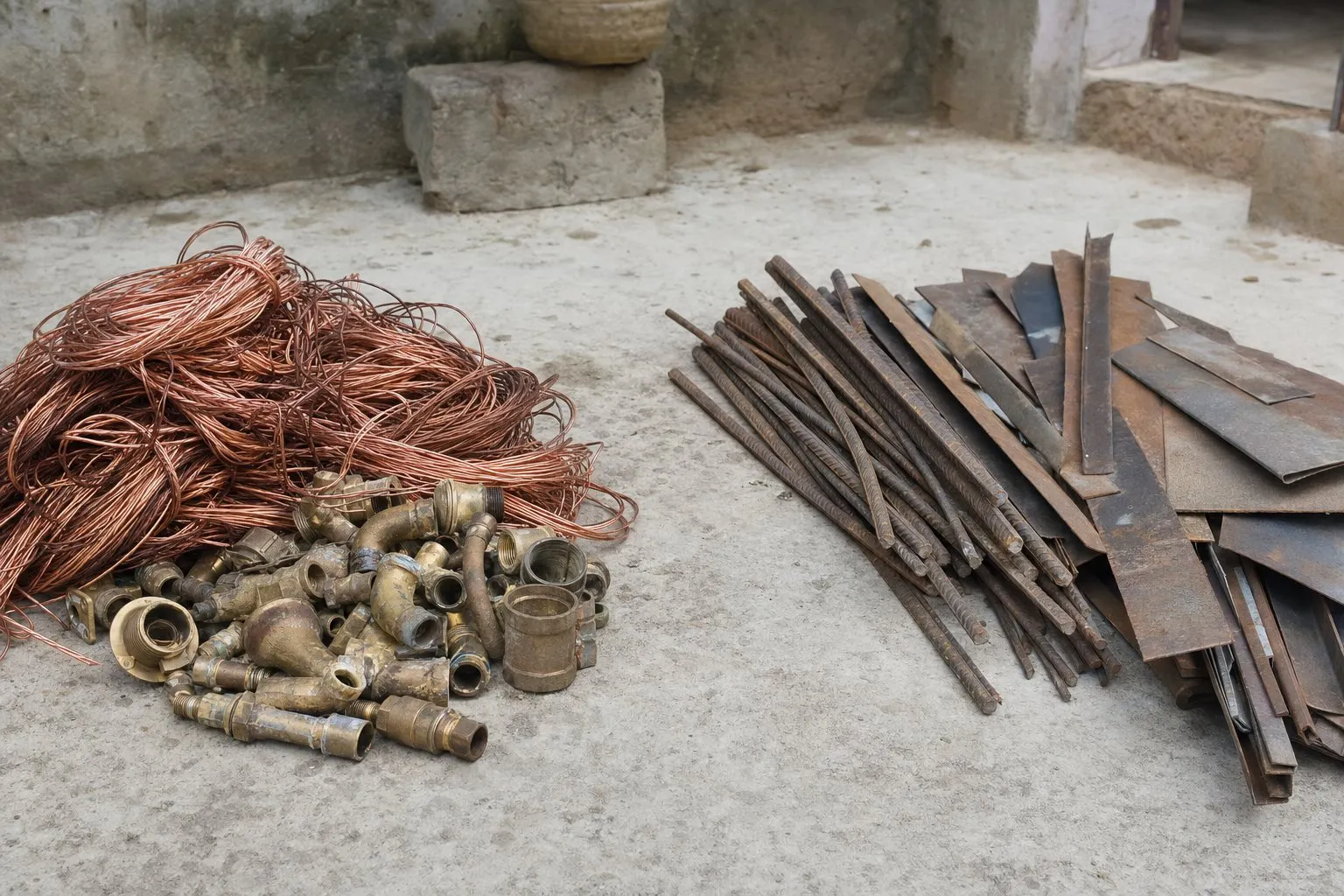
Copper, brass, aluminium, stainless steel and iron each carry their own rate, and the gap between them is large. Copper runs into the hundreds of rupees per kilo while iron is in the tens. If you hand over a mixed load, the buyer has two options: sort it themselves and pay you properly, or quote one blended figure that quietly prices your copper at iron weight. The second is common, and it is where most of the money disappears.
So separate as you gather. Copper in one pile, aluminium in another, iron in a third. It takes twenty minutes and it is the difference between a fair payout and a poor one. Our iron and metal scrap page lists what falls into each category if you are unsure.
Why grade matters as much as weight
Sorting by material gets you most of the way. Sorting by grade gets you the rest, and almost nobody does it. Two piles of iron can be worth a third more than each other depending on what is in them, and the difference is not weight. It is what the metal is.
Iron and steel are graded by how clean and how heavy the pieces are. The top grade is called HMS 1, which means heavy melting scrap: thick steel plate, structural beams, heavy machinery parts, with no attachments. It sells for a clear premium over mixed light iron. The moment you add sheet metal, thin tube, or a gate with paint and hinges still on it, you have dropped into a lower grade, and you are paid accordingly.
Copper is graded the same way, and the spread is wider. Bright copper, also called millberry, is bare uncoated wire with nothing on it, and it carries the highest rate of any common scrap. Number 1 copper is clean pipe and bus bar. Number 2 copper has solder, paint or light oxidation on it. Insulated wire is the lowest of the four, because the plastic insulation is weight you are not paid for. That is why stripping a cable run before you sell it is usually worth the hour it takes.
You do not need to memorise grade names. What matters is that you do not mix them. Keep bright wire away from painted pipe, keep heavy plate away from thin sheet, and you will be paid at the right rate for each without having to argue about it.
Step 3: Check the day's rate before you call
Scrap prices move daily. Metal tracks the London Metal Exchange and the local Hyderabad market, and fuel and seasonal demand move the rest. A rate quoted last month tells you nothing about today.
So check before you book. Our price list carries an indicative rate for every item we buy, and a phone call gets you the exact number for your material on the day. Any buyer worth using will quote you a rate per kilogram on the phone, before they arrive. If they will not, that is your answer.
Step 4: Book the pickup
For anything beyond a few kilos, use a buyer who comes to you. Doorstep collection is free across the GHMC limit, and it means you are not loading a fridge into a borrowed auto.
Have three things ready when you book: what you have, roughly how much, and where it is. Floor number, lift access and parking matter more than you would think, because they decide how long the pickup takes. Book early in the day and it can usually be done the same day.
If you are in an apartment block, tell the security desk too. It saves the team a phone call at the gate.
Step 5: Watch the weighing
Insist on watching, and insist on a digital scale. You should see the reading on the display, and you should be given a ticket with the weight on it. There is no reason for a legitimate buyer to object to either.
Be wary of a spring scale, and be wary of any arrangement where the load is weighed somewhere else and reported back to you. Both remove your ability to check the number, which is the whole point.
The four mistakes that cost sellers money
- Mixing copper in with iron. You lose the copper premium, and it is the most expensive mistake on this list.
- Selling copper wire without stripping the insulation. Insulated wire is priced lower because the plastic is weight you are not paid for; stripping can lift the value of a cable run substantially.
- Accepting a spring scale instead of a certified digital one. You cannot verify the reading, so you cannot verify the payout.
- Agreeing to deductions for cleaning, loading or delivery. These are not real costs in this trade. A buyer who adds them at the end is changing the price after the fact.
What a fair transaction looks like
A rate quoted per kilogram on the phone and honoured on the day. Sorting done on site, so each metal is paid at its own rate. A certified digital scale, weighed in front of you. Payment before the load leaves, by cash, UPI or bank transfer, with a GST invoice if you need one.
The rate we quote on the phone is the rate we pay on the day.
That is the whole standard, and it is not a high one. It is just the one that gets broken most often.
If you have something to sell, book a pickup or call us on +91 97004 36932. If you would rather check us out first, we are at Bakaram in Kavadiguda, and you are welcome to walk in and see how the yard works.
- Scrap pricesScrap Prices in Hyderabad TodayIndicative rates for iron, copper, aluminium and batteries in Hyderabad, and the reason the number you were quoted last month is already out of date.
- Vehicle scrappingVehicle Scrapping in HyderabadThe 2021 scrappage policy changed how end-of-life vehicles are retired. Here is the process, the documents, and what the Certificate of Destruction is actually worth to you.
KGN Enterprises · 1-4-877/3, Bakaram, Kavadiguda, Hyderabad – 500020 · Mon–Sat · 8 AM – 8 PM. Weighed on a certified digital scale, paid on the spot.
See our Google profile